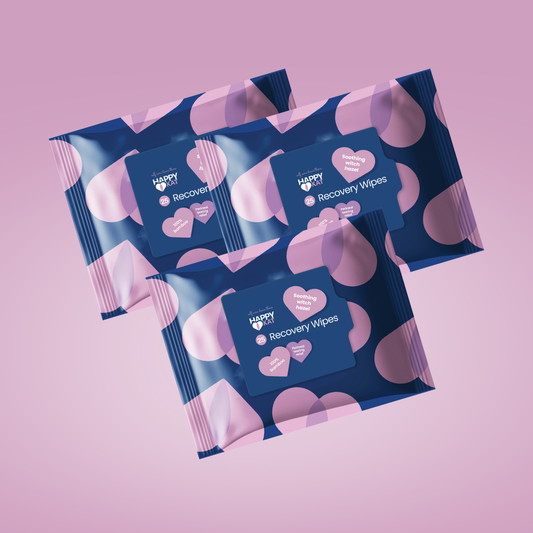

Recovering after birth takes time, especially when your perineum has stretched, worked and performed like a champion. Knowing what to expect, having supportive postpartum products and understanding when to seek help can make those early days much more comfortable. If you want practical essentials ready before birth, the Happy Kat Postpartum Recovery Pack includes perineal ice packs, a peri wash bottle and soft postpartum underwear to support healing.
So let’s talk about down there.
What Is the Perineum and Why It Matters After Birth
The perineum is the small area of tissue between your vagina and anus. It supports your pelvic floor and plays a role in everyday essentials like peeing, pooing and sex.
During a vaginal birth, this area stretches more than it ever has before. Around 85 percent of women experience some degree of tearing, and some have an episiotomy. Most perineal tears heal well with proper postpartum care, although healing time depends on the severity of the tear. Tenderness, swelling and stinging are very normal in the early days.
If you want supportive products for this stage, the Happy Kat Postpartum Recovery Pack includes perineal ice packs and a peri wash bottle designed to make healing easier.
Types of Perineal Tears After Birth
First‑degree tear
A small graze or skin tear. Stings but heals quickly.
Second‑degree tear
Involves skin and muscle. Very common. Usually stitched. Heals in a few weeks.
Third‑ and fourth‑degree tears
Involve deeper muscle and sometimes the anal sphincter. Less common and require specialist follow‑up.
What Slows Perineal Healing
Your perineum is sensitive during recovery. These things can irritate it:
- Constipation and straining
- Standing or sitting upright for long periods
- Overdoing it too soon
- Poor hygiene or harsh products
- Heavy lifting
- Infection
Signs of infection include increasing pain, fever, smelly discharge or wound breakdown.
Having the right postpartum essentials can help reduce irritation. The Happy Kat Postpartum Recovery Pack includes gentle, supportive items for perineal care.
How to Heal Your Perineum After Birth
1. Use Ice Packs to Reduce Perineal Swelling
Cold packs help reduce swelling in the first 48 to 72 hours. Ask your midwife or doctor how to use them immediately after birth and during the first few days. The Happy Kat Postpartum Recovery Pack includes perineal ice packs designed for this exact purpose.
2. Pain Relief You Don’t Need to Be Brave About
Speak to your health practitioner or pharmacist about suitable pain relief. There are safe options that can help you move, feed and rest more comfortably.
3. Peri Wash Bottles and Warm Water
Spraying warm water onto your perineum during and after toileting reduces stinging and keeps the area clean. A peri wash bottle is included in the Happy Kat Postpartum Recovery Pack.
4. Rest to Support Healing
Lie on your side. Avoid long walks or strenuous exercise. Avoid sitting upright for long periods.
5. Soft, Breathable Pads or Postpartum Undies
No tampons until bleeding stops. The Happy Kat Postpartum Recovery Pack includes soft postpartum underwear designed for comfort.
6. Gentle Pelvic Floor Activation
Start reconnecting with your pelvic floor from day two. A physio or osteo specialising in post‑birth recovery can guide you.
7. Avoid Constipation
Hydration, fibre and stool softeners can help. Speak to your health practitioner or pharmacist about safe options if you are breastfeeding.
How to Make Toileting Less Terrifying
The first postpartum poo deserves its own award. Here’s how to make it easier:
- Use a footstool to get into a better position
- Breathe out instead of straining
- Support your perineum with a folded pad
- Drink plenty of water
- Use stool softeners if needed
When to Get Medical Help
Contact your GP, midwife or maternity unit if you notice:
- Increasing or severe pain
- Fever or feeling unwell
- Smelly discharge
- Wound opening or breakdown
- Difficulty controlling your bowels or bladder
- Heavy bleeding or large clots
- Sex, Intimacy and Feeling Normal Again
Your perineum may feel tender for weeks. Many women wait until 6 to 12 weeks to resume sex, and comfort varies. Health practitioners recommend waiting until you feel ready.
Tips for easing back in:
- Use plenty of lubricant
- Go slow
- Communicate
- Stop if it hurts
- See a pelvic floor physio if pain continues
Supporting Long‑Term Perineal Recovery
Pelvic Floor Physiotherapy
A women’s health physio can help with pain, heaviness, incontinence, return to exercise and scar massage when appropriate.
Gentle Movement
Short walks are fine. Avoid heavy lifting and high‑impact exercise until at least 12 weeks.
Good Nutrition
Protein, iron, vitamin C and hydration support tissue healing.
Sleep (or the closest thing to it)
Your body heals when you rest. Even small naps help.
The Happy Kat Takeaway
Your perineum has just done one of the most impressive things a human body can do. It deserves kindness, patience and plenty of TLC. Most women heal well with simple care, rest and good support. If something doesn’t feel right, trust your instincts and reach out to your midwife, GP or physio.
If you want practical tools to support your recovery, the Happy Kat Postpartum Recovery Pack includes perineal ice packs, a peri wash bottle and soft postpartum underwear to help make day‑to‑day healing more comfortable.
Learn More
-
Postpartum Breast Care Guide: How to Relieve Sore Nipples, Engorgement – Happy Kat
-
Lochia After Birth: Postpartum Bleeding, Your First Period & Recovery – Happy Kat
- Postpartum Essentials & Tips for New Mums – Happy Kat
References:
- Australian Institute of Health and Welfare (AIHW). Australia’s mothers and babies 2021: In brief. Australian Government.
- Australian Institute of Health and Welfare (AIHW). Perineal tears: Third- and fourth-degree tears. Australian Government.
- Australian Living Evidence Collaboration. Australian Postnatal Care Guidelines (Version 10). 2026.
- Breastfeeding Network. Cracked nipples and moist wound healing.
- Continence Foundation of Australia. Pregnancy and childbirth.
- Li M, Li D, Bu J, Zhang Y, Wang H. Examining the factors influencing postpartum musculoskeletal pain: A thorough analysis of risk factors and pain assessment indices. European Spine Journal. 2024;33(2):517–524.
- Pregnancy, Birth and Baby (Australian Government). Constipation after birth.
- Pregnancy, Birth and Baby (Australian Government). Haemorrhoids after birth.
- Pregnancy, Birth and Baby (Australian Government). Bladder weakness (incontinence) after birth.
- Royal Women’s Hospital. Perineal tears and episiotomy.
- Royal Women’s Hospital. Bladder and bowel health after birth.
- Royal Women’s Hospital. Constipation after birth.
- Royal Women’s Hospital. Haemorrhoids after birth.
- South Eastern Sydney Local Health District (Royal Hospital for Women). Bladder care during labour and the postpartum period (Local Operating Procedure). 2025.
- APTA Pelvic Health. Musculoskeletal dysfunction during pregnancy and after childbirth. American Physical Therapy Association; 2019.
General advice only. Consult your healthcare provider for personalised advice.